



The Nigerian law enforcement agencies have been urged to prioritize human rights and proportionality in the use of force, as experts emphasized the need for training and equipping officers to make sound decisions under pressure.
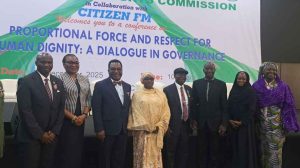
Speaking at a conference organized by the National Human Rights Commission (NHRC) in collaboration with Citizen FM, the Senior Advocate of Nigeria and Dean of the Faculty of Law, University of Jos, Dakas Dakas, emphasized the importance of strengthening training curricula to include human rights principles, communication and de-escalation skills, and crowd management scenario-based exercises.
According to him, equipping law enforcement officers with adequate less-lethal tools, saying “if officers have more tools, they make better choices.”
He urged officers not to see proportionality as weakness, but rather as “strength, precision, discipline, and professionalism”.
Earlier in his opening remarks, the Executive Secretary of the NHRC, Dr. Tony Ojukwu, stated that disproportionate force should be considered as torture, cruel, inhuman or degrading treatment or punishment, unless good faith on the part of the officer is established beyond a reasonable doubt.
The Chairperson of the National Drug Law and Enforcement Agency (NDLEA), Buba Marwa, advised that the deployment of force by state institutions must always be guided by the principle of proportionality, grounded in law, informed by necessity, and applied with restraint.
The conference aimed to promote accountability and ensure that security operations are guided by both constitutional and international standards. The event was attended by prominent dignitaries, including representatives of governors, security agencies, and civil society organizations.
The experts highlighted the negative implications of disproportionate use of force for citizens’ rights and health, as well as Nigeria’s democracy. They emphasized the need for independent oversight and complaint mechanisms to promote accountability and restore public trust.