




The Federal Government has announced a sweeping reform of Nigeria’s education system aimed at cutting the cost of schooling for parents, improving learning outcomes, and promoting environmental sustainability through the introduction of reusable, high-quality textbooks.
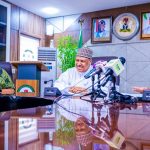
The new policy framework, released by the Federal Ministry of Education, was jointly signed by the Minister of Education, Dr. Maruf Tunji Alausa, and the Minister of State for Education, Prof. Suwaba Sai’d. It forms part of broader efforts to reposition the education sector and ease the growing financial burden on Nigerian families.
This was contained in a statement on Friday 9th, January, 2026, by Boriowo Folasade, Head of Press and Public Relations.
Under the policy, schools will be required to adopt standardized, durable textbooks designed to last between four and six years. The government has also banned the practice of bundling disposable workbooks with textbooks, a move officials say has forced parents to buy new books every academic session.
According to the ministers, the reform will allow textbooks to be reused across multiple years and shared among siblings, significantly reducing recurring expenses for households while cutting down on waste in schools.
The policy also strengthens quality assurance in textbook development and use. It addresses longstanding complaints about frequent but superficial textbook revisions that offered little improvement in content while compelling parents to make annual purchases. Going forward, revisions must demonstrate clear and meaningful enhancements in substance, rather than minor changes in layout or pagination.
In line with international best practices observed in countries such as Japan, Kenya, and Tanzania, the government will limit the number of approved textbooks per subject and grade level.
Officials say this will raise quality standards, reduce market saturation, and simplify textbook selection for schools and education authorities.
As part of the wider reform agenda, the Federal Government has introduced a uniform academic calendar nationwide to improve consistency in teaching, learning, and school planning.
Graduation ceremonies have also been streamlined to reduce unnecessary costs.
Under the new guidelines, only pupils and students completing Primary Six, Junior Secondary School Three (JSS3), and Senior Secondary School Three (SSS3) will be permitted to hold graduation ceremonies.
The Nigerian Educational Research and Development Council (NERDC) will retain its central role in assessing and approving instructional materials, working with other education agencies to ensure that all textbooks used in schools meet curriculum and quality standards.
The Ministry of Education commended the Universal Basic Education Commission (UBEC), NERDC, and other technical partners for their contributions to the policy’s development.
Reaffirming the government’s commitment to education reform, the ministers said the initiative is designed to protect academic standards, promote equity, reduce costs for parents, and ensure that learners across Nigeria have access to durable, high-quality learning materials that support effective teaching and improved educational outcomes.