



The Ministry of Foreign Affairs has launched a dedicated Cyber Diplomacy Unit. The unit’s mandate is to coordinate Nigeria’s cyber-related foreign policy across all diplomatic platforms.
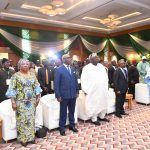
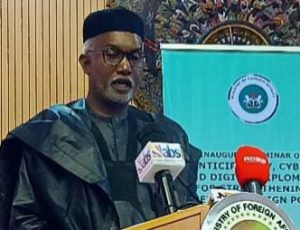
The Minister of Foreign Affairs, Amb. Yusuf Maitama Tuggar made this known while declaring opened a high-Level Seminar on Anticipatory, Cyber and Digital Diplomacy organised by the Ministry in Abuja on Monday.
Amb. Tuggar said the Cyber Diplomacy Unit aims to “Build capacity for cyber negotiations, champion ethical and inclusive digital governance, foster public-private partnerships for national cyber resilience, and ensure that Nigeria’s voice is influential in dealing with cyber-space problems.
“The convergence of disruptive technologies, shifting geopolitical alignments, and deepening digital interdependence is redefining the foundations of diplomacy.
“From artificial intelligence and quantum computing to the geopolitics of data and the utilisation of cyberspace, the very nature of statecraft is being written right before our eyes. Nigeria must not be a mere bystander”.
The Minister emphasized that Nigeria must act with purpose to position itself as a principled, capable, and forward-looking actor in an evolving global digital order.
He said this requires embedding anticipatory cyber and digital diplomacy into the core of our foreign service, our national security architecture, and our multilateral engagements.
According to him, anticipatory diplomacy provides us with the ability to detect early warning signals, foresee systemic shocks, and plan strategically for the future, whether in the global race for critical minerals, the regulation of artificial intelligence, or the restructuring of global supply chains.
“Our diplomats must be trained not merely to react, but to influence events before they unfold”.
Giving more insights, Amb. Tuggar said Cyber Diplomacy is about how we react, how we reach global standards to combat cyber crime and cyber warfare, how we balance national sovereignty with bilateral treaties and multilateral cooperation.
“It is how we engage with our partners to tackle malicious activities, protect critical infrastructure, (2:26) and support the integrity of relations and other interests vital to peace, stability, and progress.
“Cyber diplomacy is about how we work together on data privacy, Internet freedom, and control over information.
“It is about working together on capacity building and sharing expertise.
In his goodwill message, the Attorney General of the Federation and Minister of Justice, Lateef Fagbemi, SAN, emphasized that cyber threats pose a danger to national infrastructure and the rule of law.
Fagbemi stressed that Nigeria’s legal framework must therefore be robust enough to deter cybercrimes, enforce justice, and foster international cooperation to protect digital sovereignty.
“The 21st century has introduced a paradigm shift in the nature of conflict, communication, and cooperation, demanding a fundamental transformation of traditional statecraft.
“The rise of a globally interconnected digital landscape presents both unprecedented opportunities and complex challenges, rendering traditional diplomatic methods insufficient.
“As Nigeria’s Chief Law Officer, the Ministry of Justice is positioned to address this new reality with strategies that are proactive, technologically astute, and ethically grounded”, he stated.
The Justice Minister said anticipatory diplomacy involves developing the foresight to identify and address potential challenges before they escalate.
Noting that from the perspective of the Ministry of Justice, it requires a forward-looking legal and policy framework that can effectively manage the impacts of rapidly emerging technologies.
“This also includes policy frameworks that address legal, security, and ethical issues such as data governance, artificial intelligence, and cybersecurity”, he added
Spark News Naija reports that the Seminar was attended by the National Security Adviser, Mallam Nuhu Ribadu and members of the diplomatic community, including the British High Commissioner to Nigeria, Mr Richard Montgomery.