



…Says It’s Too Redundant, Monotonous for Capital Crime Control
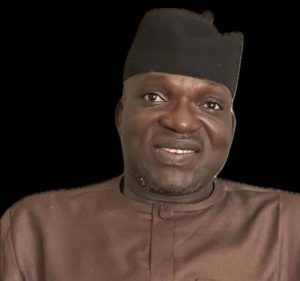
A criminologist and human rights interventionist, Dr. Illah Obadiah has called on the Nigerian government to consider reforming the death penalty policy for life sentences.
Dr. Illah is the Chief Executive Officer of Confidence Building Initiative International (COBII), a Non Governmental Organization in Lafia. The CEO made this call recently in Lafia, the capital of Nasarawa State.
The caller is also a lecturer and Chairman of the Academic Staff Union of Polytechnics (ASUP) of Isa Mustapha Agwai I Polytechnic, Lafia, Nasarawa State.
According to Dr, the global community and social theorists, including criminologists, are beginning to advance arguments in support of life sentences as a long lasting effect for the death penalty.
Death penalty which is also called capital punishment is a judicial practice in which an offender is executed when convicted of committing capital offence or capital crime. It’s a practice which requires that revenge is made equal to the original injury suffered when a crime is committed i.e. “eye for an eye”, “tooth for tooth”, the CEO added.
In his words, ”Death penalty or capital punishment dates back to 1750 BC and has existed as a punitive measure for the most heinous of crimes or wrongdoing in most societies. According to Amnesty International, the number of executions in Nigeria are often unclear with most of the convicts still on death row estimating to about 2, 700 from 2010 to 2020”.
“However, a human rights group known as Global Rights revealed that Nigeria has recorded 800 extrajudicial killings between the period of 2020 and 2023”, Dr. added.
The CEO said, while the right to life is an element both fundamental and universal of every human, various jurisdictions across the world have stipulated permissible limitations to this right, including the imposition of the death penalty.
In Nigeria, section 33(1) of the 1999 constitution affirmed the legality of the death penalty thus: “Every person has a right to life, and no one shall be deprived intentionally of his life, save in execution of the sentence of a court in respect of a criminal offence of which he has been found guilty in Nigeria”.
He enumerated capital offences in Nigeria to include but not limited to murder, treason, and conspiracy of treason, armed robbery, treachery and fabricating false evidence leading to the conviction to death of an innocent person. When convicted, capital crime offenders are executed through firing squad, hanging, stoning and the use of lethal injection.
In his stern position, Dr. Illah submitted that the death penalty imposition in Nigeria is redundant if not risky because it has arguably not spurred the needed social structure reformation in the administration of criminal justice in the country.
“In addition, not only is it monotonous, those sentenced to death continue to rot and waste away on the death row with substantial monetary requirements detailing their upkeep. A country operating under such legal order can rarely exist outside the snow of legal infractions and socio-economic imbalances”, the CEO added.
Looking forward, the revered academic and human rights apologist asserts that life imprisonment through reformatting and rehabilitating engagements offers offenders the window to embrace what is right having known the consequence of doing what is wrong from the prison experience.
“If fully enforced, life sentence or life imprisonment will allow for programmes of rehabilitation and re-education of convicts through a formal process, thereby preserving life from being wasted via practical execution, death row enlistment and miscarriage of justice as the case may be”, Dr Illah said.
Fundamentally, it must be noted that death is an irreversible phenomenon but life sentence infringes less on human rights while costing less in the short and/or long term implementation intervention.
In light of the foregoing, countries including Nigeria, still giving a premium to capital punishment are recommended by force of reason to abolish the death penalty and replace it with life imprisonment.
According to him, this is because, the effect of capital punishment is not about the victim and the victimizer; it is not just about the families or parties involved; it is about everybody, man and woman, government, country and the society.
“It has been established that with the use of capital punishment, there has been high risk or possibility of executing innocent defendants, but if life imprisonment is substituted for the death penalty, innocent people will no longer stand the chance of being executed for offences or crimes they did not commit or have been accused of erroneously”, he noted.
In his words, “critical reality suggests that the adoption of social security measures such as (job creation, skills acquisition programmes for the youth, enhanced remuneration, provision of good education system, economic diversification, infrastructural development and value re-orientation) will imply a great deal in the Nigerian situation. This is because criminal activities by their very nature are socio-economic in the Nigerian case. Abundantly, the administration of criminal justice throughout the world has demonstrated that those who have the honour and privilege of presiding over guilt or innocence of suspects sometimes make mistakes”.
Additionally, a report of the Royal Institute of International Affairs (Chatham House) in 2022 revealed that about 61% of judges in Nigeria today are likely to receive bribes to influence their sense of judgment or decision in court.
In this situation, is the court spared of sentencing the innocent to death? As such, the government is strongly advised to shift punishment by death towards correction rather than destruction, Dr Illah said.
Continuing, the lecturer said, “The Rwandan government for instance, used the Gacaca’ dispute resolution and rehabilitation process, a homegrown post genocide community based court system in place of capital punishment for its war convicts and in tackling the 1994 genocidal war. This philosophy saved Rwanda of many losses which often accompany the practice of capital punishment and enabled her to pick up very fast in regaining economic feats among the committee of nations in Africa.
“On the global scale, further work needs to be done on the promotion of national legislation abolishing the death penalty; increase enforcement of the Universal Declaration on Human Rights and ratifications on the Second Optional Protocol to the International Covenant on Civil and Political Rights (ICCPR), aiming at the abolition of the death penalty”.
Dr. Illah recommended that by way of practical translation, there should be a creation of “National farms or factories” in Nigeria. These capital crime convicts beyond execution can be held for a maximum period of lifetime to cultivate agricultural foods to feed the free population at normal market price.
“Nigeria has a vast area of arable land which can gainfully be utilized along this line. They can also be trained in ICT and social services to make them tenable for general municipal interventions. If implemented, this system will benefit both Nigerian society in addressing unemployment problems and the condemned because the latter is enabled within the farmlands/factory to engage in meaningful production and at the same time enjoy decent life and equally raise their own family in the context of partial disenfranchisement. An offender can also be made to render some community service activities such as daily road clean-ups, working at public or private firms for free, make speeches in public forum on tips against the offences he has committed on why potential criminals must desist from such acts in the future”, he concluded.