

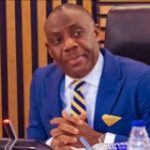

The Honourable Minister of Power, Chief Adebayo Adelabu has highlighted the critical link between reliable energy access and quality healthcare delivery in Nigeria.
The Minister highlighted it on Tuesday while speaking at the First National Stakeholders’ Dialogue on Power in the Health Sector.
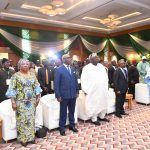
The event held at Abuja Continental Hotel brought together key stakeholders from the power and health sectors, marking a significant step towards strengthening collaboration to ensure sustainable and affordable electricity supply to healthcare facilities across the country.
Adelabu noted that the meeting underscores Nigeria’s readiness to approach development differently, breaking away from siloed sectoral approaches.
He stressed that collaboration between the power and health ministries, supported by development partners and private stakeholders, is essential for turning policies into real impact for Nigerians.
This dialogue aligns with President Bola Ahmed Tinubu’s Renewed Hope Agenda, which identifies access to power and quality healthcare as top national priorities. The Electricity Act 2023 has enabled decentralization and liberalization of the power sector, allowing subnational government participation. The Federal Ministry of Power has developed the National Integrated Electricity Policy (NIEP) and is implementing initiatives like the Rural Electrification Agency’s (REA) solar hybrid mini-grids and standalone solar home systems to electrify healthcare centres.
Notable interventions include REA’s deployment of 50kW solar mini-grid solutions to 100 healthcare facilities during the COVID-19 pandemic and commissioning of solar hybrid systems at the University of Maiduguri Teaching Hospital (12MW) and University of Calabar Teaching Hospital (7MW). These projects have improved healthcare services, enabling functional vaccine storage, maternal and child health services, cold storage for medicines, and emergency services in previously off-grid locations.
The Minister expressed commitment to working with the Ministry of Health and Social Welfare to ensure no healthcare facility is left without reliable power, leveraging renewable energy, distributed generation, and battery energy storage systems. He called for scaling up electrification projects, strengthening policy frameworks, expanding financing structures, and institutionalizing collaboration to achieve universal access to electricity for healthcare facilities, ultimately powering hope, dignity, and Nigeria’s future.
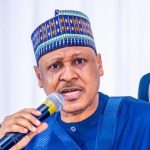
Spark News Naija reports that the event was attended by prominent figures including the Coordinating Minister of Health and Social Welfare, Prof. Muhammad Ali Pate, and the Honourable Minister of State for Health and Social Welfare, Dr. Iziaq Adekunle Salako, alongside development partners and stakeholders, all expressing commitment to implementing outcomes from the dialogue.