




Rather than focusing solely on weapons and equipment, Nigeria’s military leadership on Tuesday turned attention to deepen institutional reforms, innovation and cooperation as critical tools for confronting the country’s evolving security challenges.
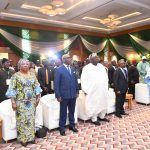
This perspective dominated discussions at a high-level strategic seminar convened by the Armed Forces of Nigeria (AFN), where senior commanders, scholars and defence experts examined how internal transformation and improved joint operations can enhance national defence outcomes.
This was contained in a statement on Wednesday 17th December, 2025, by Major General Samaila Uba, Director of Defence Information.
Participants at the seminar argued that the increasingly unpredictable security environment — marked by asymmetric threats and rapid technological change — requires the military to rethink how it plans, coordinates and executes operations across the services.
In his keynote address, the Chief of Defence Staff (CDS), General Olufemi Olatubonsun Oluyede, said the military could no longer rely on traditional approaches alone, stressing that adaptability and innovation now define operational success.
General Oluyede noted that modern warfare demands faster decision-making, better situational awareness and tighter coordination, all of which depend on new ideas and institutional flexibility rather than numbers or firepower alone.
He also highlighted persistent constraints facing the Armed Forces, including limited local defence manufacturing, gaps in emerging technologies and budgetary pressures.
Despite these challenges, he expressed optimism that ongoing reforms and a growing culture of innovation would position the AFN to maintain operational effectiveness.
From an institutional standpoint, the Director of Monitoring and Evaluation at Defence Headquarters, Air Vice Marshal Jeff Ekwuribe, emphasised that operational doctrines and systems must evolve faster than adversaries.
He urged participants to prioritise stronger joint coordination, improved intelligence integration, modern logistics and accelerated digital transformation across the services.
Adding an academic perspective, Professor Ehiz Odigie-Okpataku cautioned against viewing technology as a cure-all. She argued that without a coherent strategic vision, clear doctrine and structural reforms, technological investments would yield limited results. She also called for closer collaboration between the military, universities, the private sector and international partners to sustain long-term defence transformation.
Spark News reports that by the close of the seminar, a common theme emerged: Nigeria’s security challenges cannot be addressed by equipment upgrades alone. Instead, sustained innovation, jointness and institutional reform were identified as the foundation for a more agile and effective Armed Forces, capable of safeguarding national stability in an increasingly complex threat environment.