



The Federal Government has inaugurated two ministerial committees to address persistent industrial disputes in Nigeria’s health sector, focusing on excessive work hours for doctors, locum engagement practices, and ongoing controversies surrounding residency training certification and recategorisation.
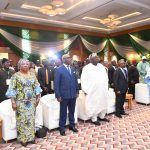
The committees were inaugurated in Abuja by the Minister of State for Health and Social Welfare, Dr. Iziaq Adekunle Salako, who said the move reflects the government’s commitment to health sector reforms, improved welfare for health workers, and enhanced patient safety.
Dr. Salako noted that issues such as prolonged duty hours, uneven application of locum appointments, and certification disputes involving resident doctors have repeatedly strained relations between government and health unions, often resulting in industrial actions that disrupt healthcare delivery.
He explained that the first panel, the Ministerial Committee on Work Hour Regulation and Locum Engagement Policy, was established to tackle concerns over exhausting work schedules and the inconsistent use of locum officers in public hospitals. According to the minister, excessive work hours endanger both the physical and mental wellbeing of health workers and the safety of patients, particularly at a time when Nigeria is grappling with a critical shortage of healthcare personnel.
Citing World Health Organisation projections that the global health workforce gap could reach 11 million by 2030, Salako said Nigeria has been severely affected by the migration of health professionals to developed countries. He disclosed that in response, the Federal Government has implemented several workforce-strengthening measures over the past 21 months, including the Health Workforce Migration Policy, streamlined recruitment processes, improved remuneration, and expanded training quotas.
According to him, 14,444 health workers were employed in 2024, while 23,059 employments were approved in 2025, with more than 70 per cent of the recruits being clinical staff. However, he acknowledged that locum engagement has often been used as a stopgap without clear guidelines, leading to abuse in some instances and underscoring the need for a comprehensive national policy.
The committee is mandated to carry out a nationwide audit of work hours and shift patterns, assess their impact on patient outcomes and staff wellbeing, consult stakeholders, and develop a national framework on safe hospital work hours, rostering, and locum engagement. This will include provisions on maximum duty hours, mandatory rest periods, and pathways for transitioning locum staff to permanent roles. The panel is expected to submit an interim report within 12 weeks.
The second committee, the Appraisal Committee on Certification and Recategorisation Policy, is to review grievances by resident doctors over the non-issuance and recategorisation of membership certificates by the Medical and Dental Council of Nigeria (MDCN) and the National Postgraduate Medical College of Nigeria (NPMCN).
Dr. Salako said the panel would conduct a transparent assessment of existing policies and demands by the National Association of Resident Doctors (NARD), particularly regarding the issuance of membership certificates following successful completion of Part I examinations. The committee, chaired by Professor Muhammad Raji Mahmud, Chief Medical Director of the National Hospital, Abuja, is expected to submit its report within eight weeks.
In separate remarks, the chairpersons of both committees pledged to discharge their duties with diligence and fairness. Chair of the Work Hour Regulation and Locum Engagement Committee, Dr. Abisola Adegoke mni, said the panel would adopt a humane approach, drawing from the lived experiences of overworked resident doctors. Professor Mahmud assured that the certification review process would be guided by justice and equity across the medical profession.
In a vote of thanks, the Director of the Regulatory and Professional Schools Division of the Hospital Services Department, Dame Francisca Okafor, commended the minister for what she described as decisive leadership, noting that the establishment of the committees marks a significant step toward restoring stability, dignity, and harmony in Nigeria’s health sector.